Loading…
Serving Tracy, CA and surrounding areas. (209) 237-1933
Serving Tracy, CA and surrounding areas. (209) 237-1933
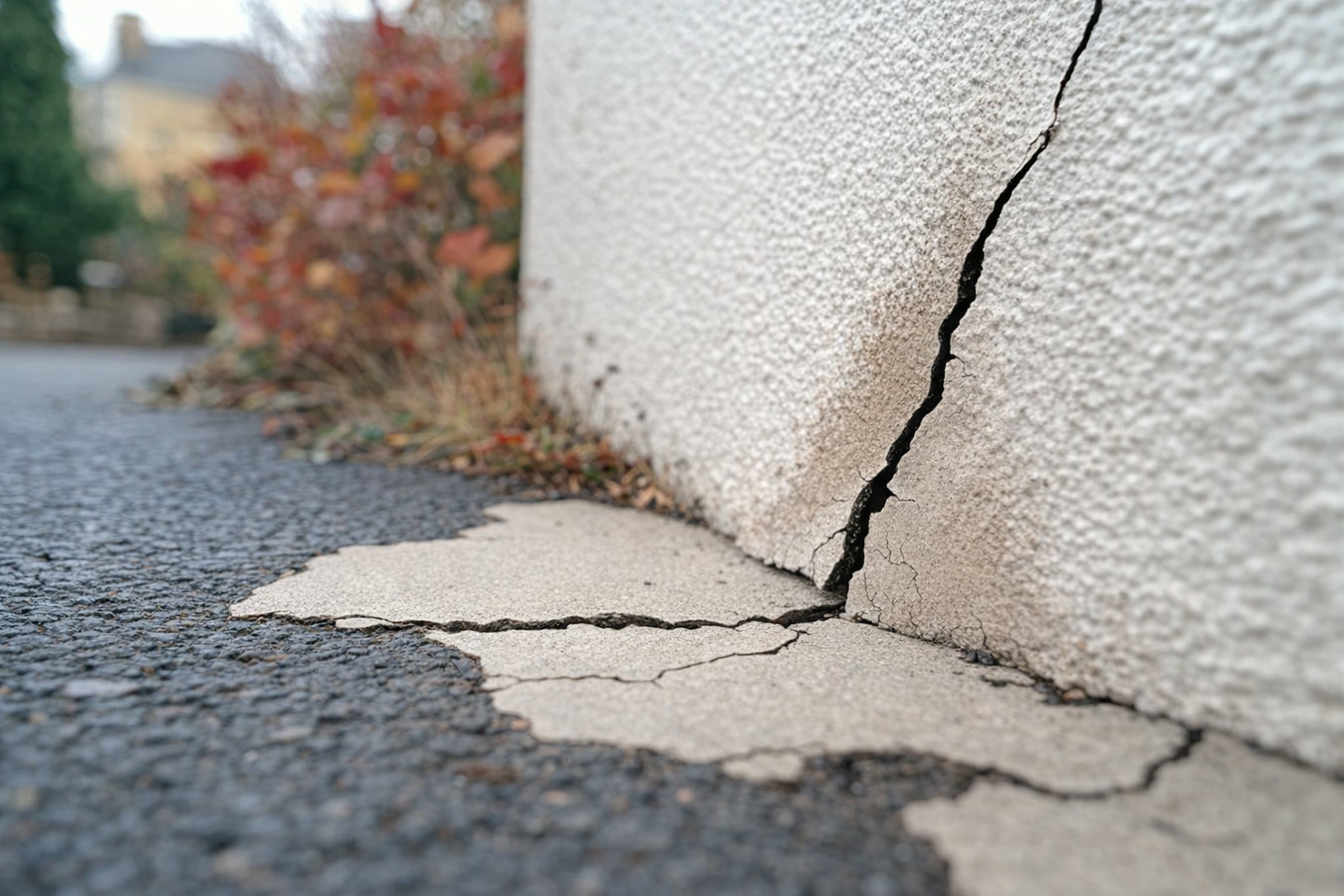
A sunken driveway, a tilting patio, or a garage floor that no longer sits level - we lift uneven concrete slabs back into position and address the soil conditions beneath them so the problem does not come back.
Foundation raising in Tracy lifts sunken concrete slabs back to their original level by pumping material beneath them through small drilled holes - most residential jobs on a driveway, patio, or garage floor take two to four hours, and you can walk on the surface the same day.
Tracy homeowners deal with this more often than most because the city sits on clay-heavy San Joaquin Valley soil that expands and contracts with every wet winter and dry summer. That ground movement is the main reason slabs sink here - and it is also why any lift job worth doing needs to address drainage and soil conditions, not just fill the void. If your slab has dropped so far that lifting is no longer the right call, a slab foundation rebuild may be the better path.
If you feel a bump or drop when you walk or drive over a section of concrete, the slab has shifted from its original position. In Tracy, this often shows up first at expansion joints where one side has dropped relative to the other. A difference of even half an inch becomes a tripping hazard and will only grow over time.
When Tracy's clay soil shrinks during long dry summers, it can pull away from beneath the edges of a slab and leave a visible gap between the concrete and the wall of your home or garage. That gap means the slab is no longer fully supported. Water can enter through these gaps and accelerate the problem.
If a door that used to swing freely now drags on the floor, or a window frame feels out of square, the slab beneath that part of the home may have shifted. This is especially common in Tracy homes built on expansive clay, where seasonal movement gradually pushes or pulls the slab in ways that affect the structure above.
Diagonal cracks - especially ones that are wider at one end than the other - are a sign that one part of the slab has moved more than another. In Tracy's clay-heavy soil, this type of cracking is common after a dry summer followed by winter rains. Not every crack means the slab needs lifting, but diagonal or stair-step cracks are worth a professional look.
We handle slab-lifting jobs of all sizes, from a single sunken driveway panel to multi-area projects covering a patio, garage floor, and front walkway in the same visit. Every job starts with a site walk to assess how far the slab has dropped, check for drainage issues, and identify whether mudjacking or polyurethane foam injection is the better fit. For situations where the concrete itself is failing rather than just settling, we will tell you honestly - and if a concrete cutting step is needed to remove a damaged section before lifting the surrounding area, we handle that as part of the same project.
When a slab has dropped so far that lifting alone will not restore it, or when a full rebuild is the more cost-effective long-term answer, we can transition the project to a slab foundation build. We sequence both stages so you do not have to start over with a new contractor or lose time waiting for a handoff.
Best suited for homeowners who need a reliable, cost-effective lift on a driveway, patio, or garage floor where the concrete is structurally sound and the budget is a priority.
Ideal for areas where speed and lightweight material matter - cures fast, adds minimal load to the soil, and holds up particularly well in Tracy's wet-dry clay soil cycle.
For homeowners whose slab keeps sinking because water is pooling near the foundation or irrigation is eroding the soil beneath - we identify the source and recommend fixes before any lifting begins.
Best for properties with several settled areas - driveway, front walk, and side patio - that can be lifted in a single visit to reduce disruption and mobilization costs.
Tracy sits on the San Joaquin Valley floor, where the native soil is loaded with clay. Clay soil behaves differently from sandy or loamy soil - it swells when it absorbs moisture in winter and contracts when it dries out under triple-digit summer heat. That annual cycle puts real stress on every concrete slab in the city, and after a few years the cumulative movement shows up as a visible dip, a gap near the garage wall, or a walkway that no longer sits flush. Slab settling here is not a sign of poor construction - it is a predictable result of the ground this city is built on. Homeowners in newer developments near Tracy who had their homes built on fill soil from the late 1990s through the 2000s often see settling sooner because the fill was not always fully compacted at construction.
Irrigation is the other major factor local contractors deal with here. Many Tracy neighborhoods have mature landscaping with sprinkler lines running close to concrete slabs. A slow leak or a poorly aimed head can erode the soil beneath a slab over months without any visible sign above ground - until the concrete drops. Before any lift job, a good contractor checks for water sources contributing to the problem. We serve homeowners across the service area, including those in Manteca, where the same clay soil conditions apply and slab settling is equally common.
You tell us where the problem is and roughly how large the area is. We reply within one business day to schedule a free on-site visit - no commitment required.
We walk the area with you, check how far the slab has dropped, look for drainage or irrigation issues, and give you a clear written quote - method, cost, and warranty all spelled out.
For most driveway and patio lifts, no permit is required. If your slab is structurally connected to your home's foundation, we check with the City of Tracy Building Division and handle any permit application before we schedule the work.
The crew drills small holes, injects material beneath the slab, watches the concrete rise back into position, then patches the holes. Most residential jobs wrap up in two to four hours - you can walk on the surface that same day.
No obligation. We assess your slab in person, explain what we find, and give you a written quote before any work begins.
(209) 237-1933Every foundation raising job we take starts with identifying why the slab sank - whether that is drainage, irrigation, soil compaction, or seasonal clay movement. A lift that does not address the root cause will sink again. We do not close a job until you know what caused the problem.
The San Joaquin Valley's expansive clay moves predictably through Tracy's wet winters and 100-plus-degree summers - and we have worked in this soil long enough to know how to account for it. Contractors who do not know this area often underestimate how much drainage work needs to accompany a lift.
You get a written estimate that lists the method, the area, the cost, and the warranty before anyone drills a hole. If the scope needs to change once work starts, we tell you why and what it will cost before we proceed.
California requires a valid contractor's license for this type of work. You can verify any contractor's license status in seconds at the California Contractors State License Board. We are licensed, carry liability insurance, and pull permits when the job requires one.
When you combine honest root-cause work with local clay-soil experience and a no-surprise written quote, you get a lift job that stays lifted - not one that needs to be redone in two years. That is the standard we hold every job to.
When a damaged slab section needs to be removed before lifting or patching, precise diamond-blade cutting keeps the surrounding concrete intact.
Learn moreFor slabs that have settled beyond what lifting can restore, a full slab rebuild on properly compacted ground is the longer-term solution.
Learn moreTracy's dry season is the busiest time for slab repairs - locking in your date now means the work gets done before the problem deepens.